CES 2027 Booth Design: How to Create an Exhibition Stand That Gets Noticed
A step by step guide to designing a CES 2027 booth that attracts senior decision makers, drives dwell time, and converts trade show leads using practical design tactics and effective staff strategies.
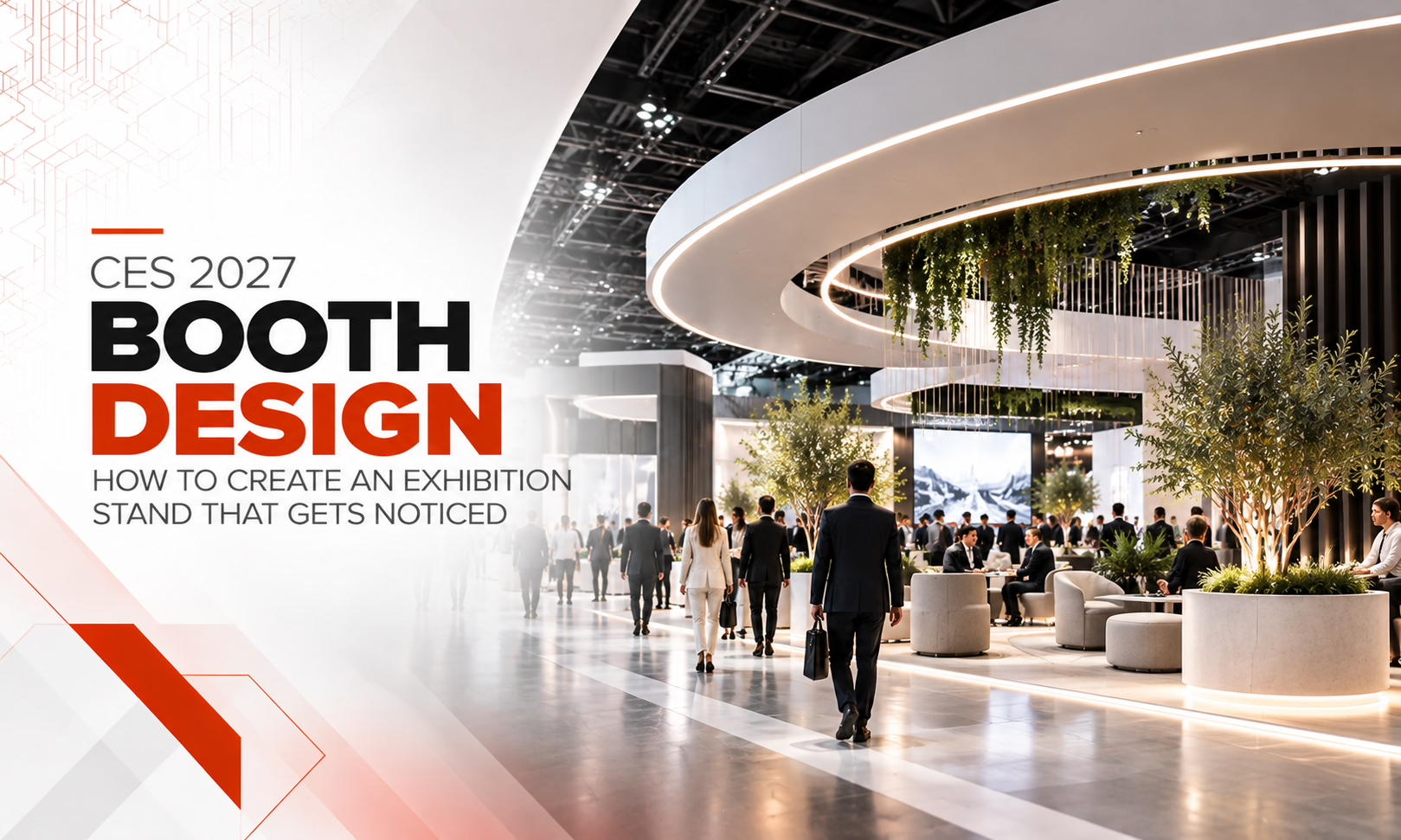
Table of Contents
Introduction
CES 2026 drew 148,392 participants, a 4% increase from the previous year, with more than 4,100 exhibitors across 2.6 million net square feet of exhibit space. CES reports that 52% of attendees were senior level executives, while 307 Fortune 500 companies had representatives at the show.
That is a large audience with strong buying influence. Your booth has only a few seconds to earn attention before visitors move on. Clear messaging, visible products, and an easy path into the space can make those first seconds count.
Poor booth design can reduce the value of your exhibition investment. If the booth does not attract attention or guide visitors into useful conversations, your team has less chance to make the most of the show floor.
This guide covers the key decisions behind a CES 2027 exhibition stand. You will learn how to set clear objectives, choose the right footprint, build visual impact, use interactive technology, and drive booth visits through preshow outreach.
Key Takeaways
- CES 2026 recorded 148,392 participants, with 52% of attendees at the senior level. A clear exhibition strategy helps your team make better use of that audience.
- Visitors make quick decisions on the show floor. CEIR research found that visual presence from across the hall was a key driver of unplanned booth visits for 71% of attendees.
- Interactive technology gives visitors a reason to stop and spend time at your booth. A hands on product demo makes the experience easier to understand.
- Preshow outreach helps your team schedule conversations before CES opens. It also gives visitors a reason to look for your booth.
- Build the exhibition budget around the full scope of the project. Account for floor space, design, fabrication, graphics, AV, shipping, and staffing before production begins.
What to Know Before Planning Your CES 2027 Booth
CES 2027 runs January 6–9, 2027, in Las Vegas. Start planning early. Floor space, booth design, fabrication, and show logistics all require time before a January event.
Before you begin the booth design, confirm:
- Your exhibiting objective: Decide whether your priority is lead generation, a product launch, brand awareness, or partnership development. Your objective will shape how you use the booth space.
- Your target visitor profile: CES 2026 attracted attendees from 141 countries, with 37.6% coming from outside the United States. Define whether you want to reach global buyers, media, engineers, or a specific industry audience.
- Your booth budget: Set a realistic range based on your booth footprint and total exhibition costs. A 10x10 booth has different space and design requirements than a 10x20 or 20x20 island booth.
- Your lead capture and follow up process: 80% of trade show leads are never followed up on (CEIR, cited via Makai Inc., August 2026). Build your follow up infrastructure before the show, not after.
- Your production timeline: Allow 4–6 months for custom fabrication and at least 6–8 weeks for a standard modular booth. Larger graphics, custom elements, and technology can add production time.
- Your project team: Assign responsibility for booth design, AV, shipping, staffing, and show floor coordination. Clear ownership keeps decisions moving as CES approaches.
Step 1: Define Your Booth Goals and Visitor Profile
Most booth problems start with a vague brief. “Maximize brand exposure” or “meet as many people as possible” does not tell the design team how to use the space. Your objective should guide decisions such as product placement, meeting space, and visitor flow.
Start with what you need the booth to accomplish.
- Lead generation: Give visitors a clear reason to stop. Keep badge scanning and lead capture simple.
- Product launch: Put the product at the center of the experience. Give visitors enough space to watch and try it.
- Partnership development: Provide a quieter area for longer conversations. Keep meeting space away from the busiest visitor flow.
- Brand awareness: Use strong visual elements to make the brand easy to recognize. Give visitors a clear reason to remember the experience.
Then define your ideal visitor:
- Job title and buying authority
- The problem your product solves
- Their familiarity with your category
- Whether they typically schedule meetings or discover exhibitors while walking the floor
Write one measurable objective before moving to Step 2: "A successful day at CES 2027 means [N] qualified [job titles] who [action] with us.” If you cannot complete that sentence, refine the objective before you start the booth design.
Step 2: Choose the Right Booth Size and Budget for CES
CES floor space comes at a premium. Your budget should cover design, fabrication, graphics, AV, shipping, onsite coordination, and staffing. The 3x rule offers a simple starting point: multiply your floor space cost by 3 to estimate the broader exhibition budget.
The right footprint depends on how your team plans to use the space.
The all in estimate covers booth design and fabrication, graphics and printing, AV equipment, shipping, onsite coordination, furniture, staffing, and lead capture technology. Scope these costs during the design phase so your team does not face unexpected expenses during move in.
To select the right footprint:
- Count your staff on the floor at the same time. For a conversational booth, plan for at least one staff member per 50 square feet.
- List the functional zones you need. Mark space for product demos, storage, display areas, and meetings.
- Map each zone to the available floor space. A 10x10 booth fits a backdrop, a demo table, and 2 staff. A 10x20 booth gives you room for a product display or enclosed meeting area.
- Match the footprint to your objective. A product launch needs room for demos. A lead generation booth needs clear visitor flow and fast badge scanning.
Sketch the floor plan on paper before you commit. Check that every required zone fits without blocking visitor movement or staff access. If the layout feels crowded, increase the footprint rather than cut essential space.
Step 3: Design for the 3 Second Visual Rule
Attendees often give a booth only a few seconds before deciding whether to stop. CEIR research from 2024 found that 71% of attendees cited visual presence from across the hall as a key driver of unplanned booth visits. With more than 4,100 exhibitors at CES, your booth needs to communicate its purpose before a visitor reaches the aisle.
Think about what visitors need to see as they approach the booth.
- From 30 feet away: Make your brand name and main message easy to read. Use overhead signage, large graphics, and strong contrast. Do not rely on a logo alone. Add a short statement that tells visitors what you offer.
- From 10 feet away: Show visitors what you do and why it matters to them. Use a strong product image or a video wall with a short demo loop. Keep the visible copy short so visitors can understand it while walking.
- At the booth entrance: Give visitors a clear reason to step inside. Put a product in use near the entrance, position a team member to greet visitors, or place an interactive feature where people can try it.
Lighting can strengthen each layer. Use accent lights to draw attention to key areas. Backlit graphics and product spotlights also help separate important elements from the wider show floor.
Visual design checklist:
- Choose one dominant brand color and one high contrast accent color.
- Use text and background combinations that meet WCAG AA contrast standards. Strong contrast also improves readability from a distance.
- Keep backgrounds simple so they do not compete with product images.
- Show people using your product when that supports the message.
- Test readability from 30 feet. Ask someone unfamiliar with your brand to explain what your company does.
Stand 30 feet from the booth design and give yourself 10 seconds. If you cannot identify the company category and main message, simplify the visual hierarchy before fabrication.
Step 4: Integrate Interactive Technology and Demonstrations
Interactive technology works best when it gives visitors something useful to do. A product demo can help someone understand a complex feature. A guided experience can give your team a natural opening for a conversation.
The technology you choose should depend on what the visitor needs to understand or experience.
- Touchscreen product demo kiosks: Let visitors explore the product while staff members speak with other attendees. Use a large display at eye level. Keep the first screen simple, then let interested visitors explore deeper content.
- Live product demonstrations: Set specific demo times and display them on your booth signage. A scheduled demonstration gives visitors a clear reason to stop and can draw attention from nearby aisles.
- AR or VR experiences: Use immersive technology when it helps visitors experience something they cannot easily see on the show floor. Keep sessions short so more visitors can take part during busy periods.
- Gamification: Use a digital quiz, challenge, or leaderboard when it supports the product story. Give booth staff a simple opening to discuss the visitor's result or response.
- Large format video walls: Use a large LED display to show product footage, demonstrations, or data visualizations. Position the screen where visitors can see it from the aisle, then use the content to start conversations inside the booth.
Every interactive element needs a clear purpose. Ask what the visitor should understand, experience, or remember after using it. If the experience adds nothing to the product story, remove it.
Step 5: Train Your Booth Staff for CES Scale Engagement
Your booth creates the first impression. Your staff turns that visit into a useful conversation. Freeman’s 2024–2025 Trends Reports found that 93% of exhibitors consider capable booth staff extremely important, while only 78% believe their teams deliver at that level.
Staff preparation should focus on what happens during an actual busy hour on the floor.
- Qualify fast: Give staff a two question qualification script they can use in under 60 seconds. Focus on the visitor’s role, needs, and level of interest.
- Know the demo: Every team member should understand the core product demonstration without relying on one technical specialist. This keeps conversations moving when the booth gets busy.
- Rotate deliberately: Limit floor shifts to about 4 hours. Schedule 30 minute breaks and meal coverage before the show begins so the booth stays staffed throughout the day.
- Escalate quickly: Give staff a clear process for bringing a senior team member into an important conversation. Use a group chat or another simple communication system that works on the show floor.
- Record each conversation: Capture the visitor’s interests, qualification level, and agreed follow up while the details are fresh. Connect your lead capture process with the CRM your sales team already uses.
Run a tabletop exercise 2–3 weeks before CES. Have every staff member complete a product demo and badge scan for a qualified visitor in under 6 minutes. Use the exercise to identify gaps before the team arrives in Las Vegas.
Step 6: Execute Preshow Outreach and a Follow Up Plan
By the end of this step, you'll have a preshow communication sequence and a day 1 follow up protocol locked in.
Preshow outreach is the highest ROI action most exhibitors skip. Exhibitors who use preshow outreach generate 46% more booth visits than walk up only strategies (CEIR, cited via Makai Inc., August 2026). The mechanism is straightforward: you're converting CES from a cold approach environment into a warm meeting environment, where prospects already know your booth number and have a reason to find you.
Start the outreach about eight weeks before the show.
- Weeks 8–6: Contact current customers, warm prospects, and relevant LinkedIn connections. Announce your CES plans, share your booth location once assigned, and give each contact a clear reason to visit.
- Weeks 4–2: Send a calendar invite with your booth number and a 20 minute meeting option. Keep the booking process simple so prospects can choose a time without a long exchange.
- Week 1: Send a short logistics message with the hall, booth number, and a direct mobile number. Give visitors the details they need to find you quickly.
- During the show: Capture qualified leads with a badge scanner or lead capture app. Record the priority level, product interest, and the agreed follow up action while the conversation is still fresh.
- Within 48 hours of each show day: Send a personal follow up that refers to the specific conversation. Mention the product discussed, the issue raised, or the next step you agreed on.
Before CES opens, confirm 15 scheduled meetings, test your lead capture process with your CRM, and prepare follow up emails for each main interest area.
Common CES Booth Design Mistakes to Avoid
Too much text on booth graphics makes the message harder to understand. Visitors rarely stop to read long paragraphs. Use a clear headline and short supporting copy. Save detailed information for conversations, product demos, and follow up materials.
- Designing for the brand manager, not the attendee: Put the visitor’s needs first. Lead with what your product does for them instead of listing every feature or company milestone.
- Ignoring vertical space: Use overhead signage and hanging graphics where CES rules allow them. A table height display has less visibility than a well placed overhead sign. Check the height limits for your specific hall before finalizing the design.
- Undersizing staff: A strong booth still struggles when too few people cover peak hours. Staff shortages can leave visitors waiting or force team members to end conversations too quickly. Match staffing levels to expected traffic and the number of conversations you want to handle.
- Forgetting coordination costs: Account for material handling, shipping, onsite labor, and coordination before production begins. These costs are harder to control when they appear during move in.
- Leaving follow up without an owner: Assign a person to manage post show lead follow up before the team leaves for Las Vegas. Set the first contact date and agree on who handles each type of lead.
What Does CES 2027 Booth Success Look Like?
If your booth design and execution are working, look for clear signs in your results:
- Above average dwell time: Track how long qualified visitors stay. Use 4.2 minutes as a reference point, not a fixed target.
- Prebooked meetings: Track how many scheduled appointments turn into quality conversations. Review the number by day to see whether your outreach is filling the schedule.
- Spontaneous photography: Notice when visitors photograph your booth or products without prompting. This can indicate that the design stands out from nearby exhibits.
- Badge scans with context: Record a qualifying note with every lead. A badge number alone does not tell your sales team what happens next.
Stretch goal: A single social post from a visitor with 1,000+ followers extends your CES marketing spend to an audience you didn't pay to reach.
Ready to Build Your CES 2027 Booth?
CES 2027 opens January 6, 2027. Custom fabrication decisions need to happen now. The 6 steps above give you the strategic framework. The next step is choosing a design and build partner with experience working at CES.
10x10 Booths designs and delivers CES exhibition booths, from focused 10x10 spaces to large island builds. Explore our exhibition stand services to see how we manage design, fabrication, and onsite execution.
Frequently Asked Questions
How early should I start planning my CES 2027 booth?
For a custom fabricated booth, start 6–8 months before CES. For a January 2027 show, that means starting now. A modular booth can often be prepared in 6–8 weeks, but popular options such as large video walls and enclosed meeting rooms book earlier. Confirm your floor space and brief the design team as soon as possible.
What is the minimum budget to exhibit at CES 2027?
There is no single minimum budget for CES. Costs depend on booth size, design complexity, shipping, technology and staffing. A focused 10x10 booth costs less than a 10x20 space with multiple demo areas and video displays.
Include travel, accommodation, and staffing in your total exhibition budget. Scope these costs before production starts so your team has a clear view of the full spend.
What booth size should a first time CES exhibitor choose?
A 10x10 or 10x20 booth often suits a first time exhibitor. A 10x10 works well when you have one main product and 2–3 staff members. A 10x20 gives you more room for a dedicated demo station and a small meeting area.
Larger island booths make sense when you have enough products, staff, and visitor activity to use the space well. Do not increase the footprint simply to look bigger. Choose the size that supports your objectives and gives visitors enough room to stop and talk.
What makes a CES booth interactive enough?
Give visitors something active to do. A touchscreen product demo, hands on product experience, or live demonstration gives your team a natural starting point for conversation.
Match the technology to the product. Use a touchscreen when visitors need to explore options. Use AR when it helps them see something they cannot easily experience on the show floor. Schedule live demos when the product benefits from explanation.
Avoid adding technology just to fill space. Every interactive element should help visitors understand the product or give your staff a reason to start a conversation.
How do I measure ROI from a CES booth?
Set your primary measure before the show. That could be qualified leads, partnership agreements, pipeline value, or media coverage. Choose a metric that matches the business objective you set for CES.
Track more than badge scans. Record visitor interest, qualification level and the agreed follow up action. After the show, compare those results with your total exhibition cost to understand what the investment produced.
Conclusion
Before the designer starts working on the booth, decide what you need the space to achieve. The design then needs to make the message visible, give visitors a reason to stop, and give your team enough space to have useful conversations.
Technology should support the product story rather than compete with it. Staff need a simple process for qualifying visitors and recording follow up actions. Preshow outreach should also give priority prospects a reason to visit your booth.
CES 2026 drew 148,392 participants, with 52% of attendees at the senior level. Your team will compete for attention across a busy show floor. Start with a clear brief, set a realistic timeline, and define how you will measure results before production begins.
Ready to Build an Exhibition That Performs?
Whether it's a fully custom build, or a multi show programme, we're here to help you plan it. Let's start the conversation.
Whether it's a fully custom build, a pop-up system, or a multi-show programme, we're here to help you plan it. Let's start the conversation.